
The Retiree's Dilemma: Connectivity in South America
When I first started rambling through South America in the late 90s, staying connected meant scouring for pay phones or hoping the hotel had a dial-up modem. Fast forward to 2026, and while the technology has leaped light years, the fundamental need for reliable, affordable communication remains, especially for those embarking on a well-deserved retirement adventure.
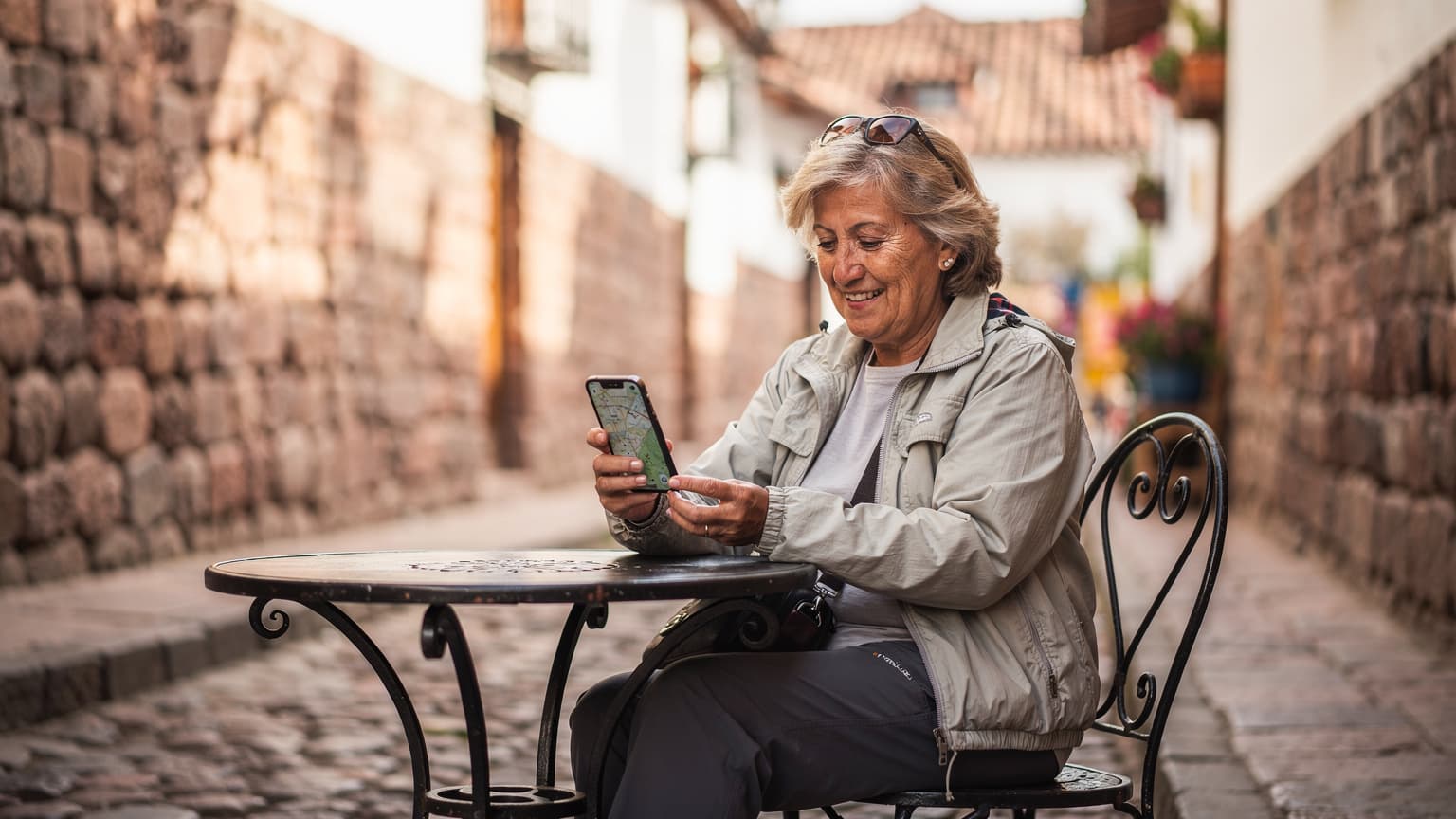
My friend, a retired history professor named Evelyn, recently spent six months tracing the Inca Trail and colonial routes from Lima's Miraflores district down to Santiago's Bellavista. Her biggest headache wasn't the altitude sickness in Cusco or navigating the bustling Mercado de San Pedro, it was the constant dance of swapping SIM cards, registering passports, and hunting for Wi-Fi. She'd spend precious hours in a Claro or Movistar store in a new city, trying to explain her data needs in broken Spanish, only to find the plan wouldn't last her entire stay or wasn't valid in the next country. This isn't how anyone should spend their retirement.
For many retirees, a long-term South American journey means embracing a slower pace, perhaps a month in Quito's La Mariscal, followed by a few weeks exploring the coffee regions near Medellín, and then a coastal retreat in Máncora, Peru. Each border crossing, each new city, traditionally brings a fresh set of connectivity challenges. The question isn't just about getting online, it's about doing so seamlessly, securely, and without breaking the bank, leaving more time for that extra glass of pisco sour or another stroll through Parque de la Reserva.
Why Retirees Need Reliable Data
Beyond the obvious need for Google Maps to find that perfect empanada stand in Buenos Aires' San Telmo, reliable data is a lifeline. It's for video calls with grandkids, accessing banking apps (especially when dealing with unexpected expenses), booking a last-minute hostel in Valparaíso, or calling an Uber or Cabify from a quiet corner of Bogotá's La Candelaria. Emergencies, too, are a very real consideration, and having a consistent connection can be invaluable. It's about peace of mind, not just convenience.
Understanding Your Options: Local SIM Cards
For decades, the local physical SIM card was the undisputed king of travel connectivity. You land, you find a mobile provider, you buy a chip, and off you go. In many South American countries, this process is fairly straightforward, but it comes with its own quirks and frustrations that can be particularly cumbersome for long-term travelers or those with less patience for administrative hurdles.
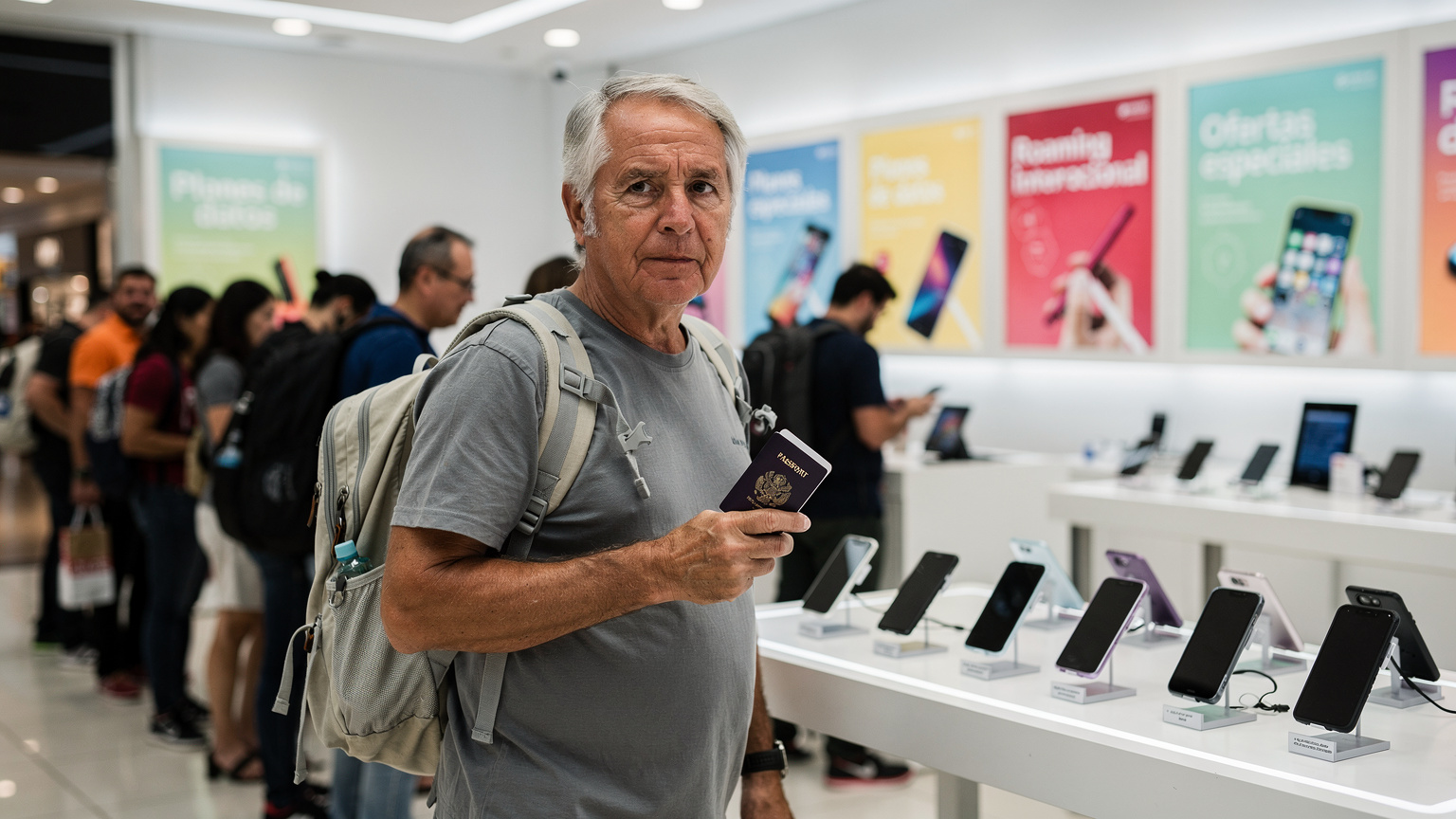
My earliest memories of buying SIMs involved finding a tiny, unnamed kiosk in a market, haggling over prices, and hoping the card actually worked. These days, it's more formal. You'll typically head to an official store for carriers like Claro, Movistar, Tigo, or Entel, often found in major shopping centers like Jockey Plaza in Lima or El Jardín in Quito. You'll need your passport, sometimes a photocopy, and a bit of patience. The registration process, mandated by local regulations, can take anywhere from 15 minutes to an hour.
The Hassle of Physical SIMs for Multi-Country Journeys
Imagine Evelyn's itinerary again: Peru, then Ecuador, then Colombia. That's three separate SIM card purchases, three registration processes, three times dealing with a language barrier, and three times fumbling with tiny plastic cards. And what about managing your primary number? Do you carry a second phone? Or do you constantly swap cards, risking loss or damage? (I once dropped a tiny SIM into a grate at the Jorge Chávez International Airport in Lima, and that was a whole afternoon I'd rather forget.)
Each country has its own dominant carriers, frequencies, and data plans. A Movistar SIM from Peru won't magically work with local rates in Ecuador. You'll be roaming, and those costs, even in 2026, can quickly become exorbitant. This constant need to adapt and repurchase can be a significant drain on both time and budget for a retiree who wants to focus on enjoying their travels, not on mobile network logistics.
| Aspect | Local Physical SIM | Ecuador Abroad eSIM |
|---|---|---|
| Purchase Process | In-person at carrier store, requires passport & registration. | Online purchase, instant digital delivery via QR code. |
| Activation Time | 30-60 minutes in-store, sometimes longer for activation. | 5-10 minutes via phone settings. |
| Multi-Country Use | Requires new SIM for each country, roaming costly. | Seamless transition, multi-country plans available. |
| Cost (Average) | $10-25 per country/month for local plans, plus roaming. | Plans from $5 for short trips, $30-50 for multi-country monthly plans. |
| Physicality | Small plastic card, easy to lose or damage. | Digital profile, no physical component. |
Understanding Local Carrier Nuances
In Peru, you'll primarily encounter Claro, Movistar, and Entel. Claro often has strong coverage in urban areas like Arequipa and Trujillo. Movistar is generally reliable in more remote regions, a crucial factor if you're venturing into the Sacred Valley or the Amazon basin. Entel, while newer, is competitive. In Ecuador, the main players are Claro, Movistar, and CNT. Claro and Movistar again dominate, with CNT being the state-owned option, sometimes offering better rates for domestic calls. Colombia is similar, with Claro, Tigo, and Movistar leading the pack.
Knowing these subtle differences is key. You don't want to be trekking through the cloud forest near Mindo, Ecuador, only to discover your chosen carrier has no signal. While eSIMs don't guarantee signal where no towers exist, a good eSIM provider will leverage the best available local networks, often across multiple carriers, to give you the most robust coverage possible.
The Rise of eSIMs: A Digital Solution
The concept of an eSIM, or embedded SIM, has been around for a while, but it's truly come into its own in the last few years, especially for international travel. Instead of a physical chip, the SIM profile is downloaded directly onto your phone. This means no more fumbling with tiny trays, no more worrying about losing your home SIM, and significantly less time spent in mobile phone stores.
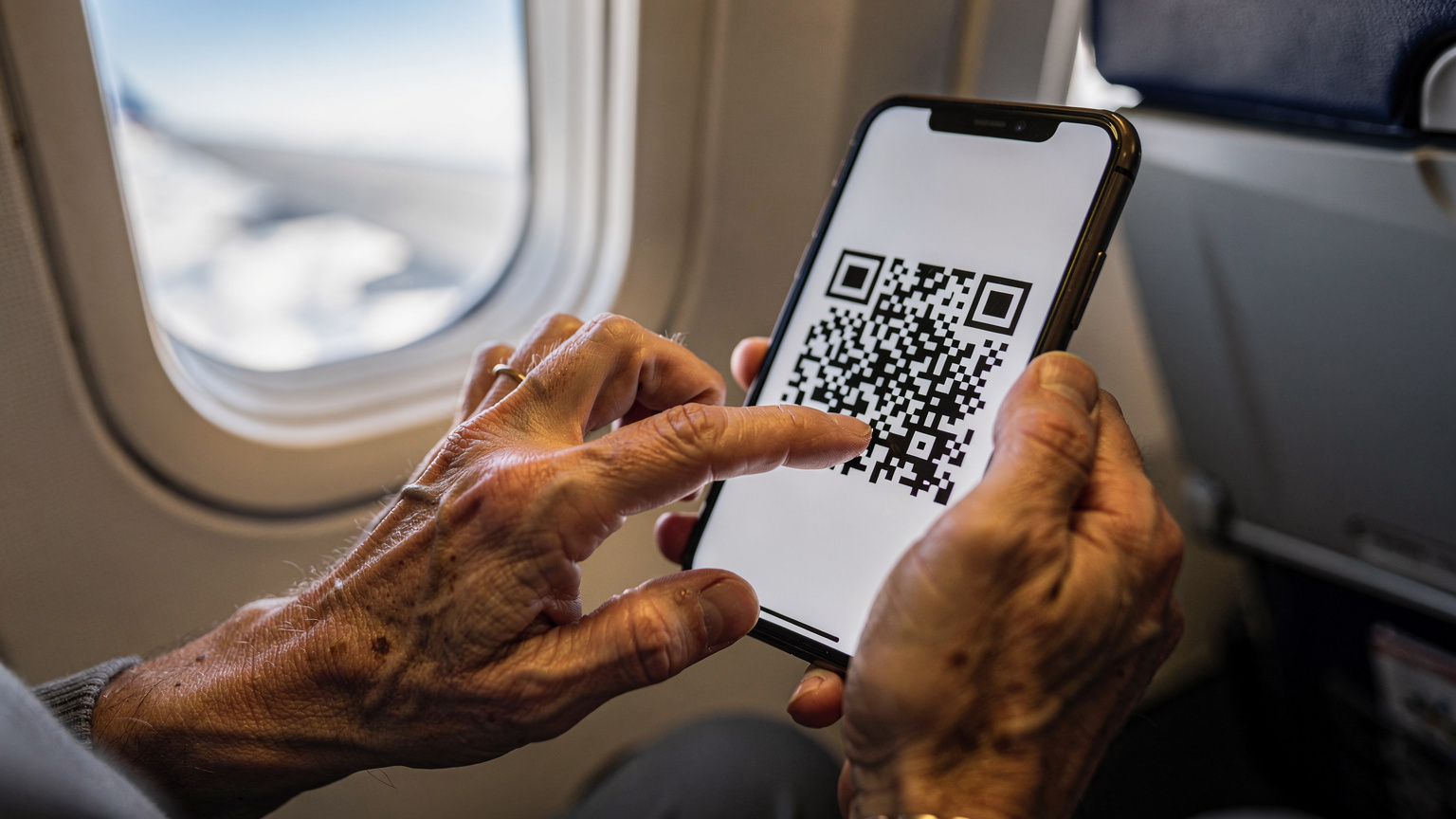
For retirees, this technology translates directly into ease and efficiency. Think of it as a digital passport for your phone's connectivity. You can purchase a plan online before you even leave home, activate it with a QR code upon arrival, and switch between plans or countries with a few taps on your screen. My mother, who struggles with anything more complicated than sending a text, found setting up an eSIM for her iPhone 15 surprisingly intuitive during her recent trip to Patagonia. (Honestly, I was more surprised than she was.)
How eSIMs Simplify Travel for Seniors
One of the biggest advantages is the ability to keep your primary number active. Many retirees rely on their home number for banking, doctor appointments, or keeping in touch with family. With an eSIM, you can use your home SIM for calls and texts (often on a pay-as-you-go roaming rate) while using the eSIM for all your data needs. This dual-SIM functionality, supported by most modern smartphones, is a game-changer. No missed calls from home, no confusing number swaps, just seamless data wherever you are.
This is particularly beneficial for iPhone users, where the dual-SIM capabilities are incredibly well-integrated into iOS. You can label your lines, set default lines for data and voice, and easily switch between them. It removes a significant layer of stress from international travel, letting you focus on the vibrant markets of Otavalo or the serene beauty of Lake Titicaca, rather than fiddling with phone settings.
Cost Comparison: eSIM vs. Local SIM in 2026
Let's talk brass tacks: money. For retirees on a fixed income, every dollar saved matters. In 2026, the pricing landscape for mobile data in South America has shifted, making eSIMs an increasingly attractive option for long-term stays and multi-country itineraries.
A typical local SIM in Peru, for instance, might cost S/30-50 (about $8-13 USD) for a monthly plan with 10-20 GB of data. This seems affordable on its own. However, if you travel to Ecuador, you'll pay another $10-15 for a local SIM there, and then again in Colombia. Over three months and three countries, you're looking at $30-45 just for the base SIMs, plus the time and effort. And forget about using these local SIMs outside their respective borders without incurring hefty roaming charges.
Ecuador Abroad, and similar eSIM providers, offer regional South America plans. For example, a 30-day, 20 GB regional plan covering Peru, Ecuador, and Colombia might cost around $40-50 USD. While slightly higher than a single local SIM, it covers multiple countries, eliminating repeated purchases and registration hassles. For a three-month journey across these three nations, you're looking at $120-150 for an eSIM versus potentially $90-135 for local SIMs, plus all the associated friction. The real savings often come from avoiding roaming, the flexibility of short-term top-ups, and the sheer value of your time. If your trip is shorter, say a week in one country, a local SIM might still be marginally cheaper, but the convenience factor still heavily favors the eSIM.
| Feature | Local SIM (Per Country) | Ecuador Abroad Regional eSIM |
|---|---|---|
| Initial Cost | $8-15 USD (Peru S/30-50) | $5-15 USD (single country), $30-50 USD (regional) |
| Monthly Data (20GB equivalent) | $10-25 USD | Included in regional plan, often tiered data options |
| Multi-Country Roaming | Very expensive, often $5-10/MB | Seamless, included in plan |
| Activation Fees | Sometimes additional small fee or package purchase | None, included in plan cost |
| Hidden Costs | Currency exchange, transport to store, potential overpayment due to language barrier | None, transparent pricing online |
The True Cost of Lost Time and Frustration
Beyond the monetary cost, there's the cost of your time and peace of mind. As a retiree, your travel time is precious. Do you want to spend an hour queuing at a Claro store in Miraflores, Lima, or sipping a coffee overlooking the Pacific? Do you want to decipher a data plan brochure in Spanish or simply activate a pre-purchased eSIM with a QR code? The value of convenience, especially when navigating unfamiliar environments, cannot be overstated.
Consider also the mental load. Remembering which SIM is which, keeping track of activation dates, and constantly worrying about running out of data can detract from the joy of travel. An eSIM consolidates this, giving you a single, easily manageable data solution for your entire South American journey. It's an investment in a smoother, more enjoyable experience.
Convenience Factors for Long-Term Travelers
I've seen countless travelers, young and old, struggle with connectivity issues. A few years back, in the bustling terminal of El Dorado Airport in Bogotá, I watched a couple in their seventies miss their transfer because they couldn't access their boarding passes, all because their recently purchased local SIM hadn't activated properly. These are the moments that truly highlight the value of streamlined connectivity.
For retirees, who might prioritize comfort and predictability, eSIMs offer significant advantages:
- No Physical Swapping: No tiny cards to handle, no risk of losing your home SIM. This is especially helpful for those with dexterity issues or simply a preference for simplicity.
- Pre-Arrival Setup: Purchase and install your eSIM before you even board your flight. Land in Guayaquil, Ecuador, and your data is ready to go as soon as you turn on your phone.
- Seamless Border Crossings: Moving from, say, Puno, Peru, to Copacabana, Bolivia? Your regional eSIM automatically connects to the best available network without you doing a thing.
- Instant Top-ups: Running low on data while enjoying the street art in Medellín's Comuna 13? Most eSIM providers allow instant online top-ups, often through their app, saving you a trip to a store.
- Retain Your Home Number: As mentioned, you can keep your primary number active for calls and texts, using the eSIM purely for data.
Navigating South American Cities with Ease
Imagine arriving at the Aeropuerto Internacional Mariscal Sucre near Quito. Instead of searching for a SIM vendor, you've already activated your Ecuador eSIM. You can immediately call your hostel in La Floresta using WhatsApp, check the Trolebús schedule, or hail an Uber. This immediate connectivity transforms arrival stress into smooth transitions. In cities like Lima, where the traffic on Vía Expresa can be formidable, having reliable data for a ride-sharing app or real-time bus tracking (like the 'Tu Ruta' app for the Metropolitano) is not just convenient, it's essential for getting around efficiently.
Setting Up Your eSIM: A Step-by-Step Guide
If you're new to eSIMs, the idea of a 'digital SIM' might sound a bit daunting. But trust me, the process is far simpler than trying to explain 'un paquete de datos para un mes' to a Claro salesperson at the Mercado Artesanal La Mariscal. Most modern iPhones and Android devices are eSIM compatible, and the setup is remarkably user-friendly.
Pre-Departure eSIM Installation for Peace of Mind
- Check Device Compatibility: First, ensure your smartphone supports eSIMs. Most iPhones from XS onward, and many newer Android models from Samsung, Google Pixel, and others, are compatible. A quick online search for 'eSIM compatible phones 2026' will confirm this.
- Choose Your Plan: Visit an eSIM provider's website. Look for regional South America plans if you're visiting multiple countries, or specific country plans if you're staying in one place. Select a data amount and duration that fits your trip.
- Purchase and Receive QR Code: Complete your purchase. You'll usually receive an email containing a QR code and manual installation details. Save this email or print the QR code.
- Install eSIM (Pre-Travel): While still on your home Wi-Fi, go to your phone's settings. For iPhones, it's Settings > Cellular > Add eSIM. For Android, it's typically Settings > Network & internet > SIMs > Add more. Scan the QR code. Follow the prompts. It's usually a few clicks, and your new eSIM profile will be added.
- Label Your eSIM: Give your new eSIM a clear label, like 'South America Data' or 'Ecuador Trip', to avoid confusion with your home SIM.
- Keep it Off Until Arrival: Crucially, leave the eSIM line 'Off' or 'Disabled' in your settings until you land in South America. This prevents any accidental roaming charges from your home network before you begin using your new data plan.
Managing Multiple Countries with Ease
This is where eSIMs truly shine for the intrepid retiree exploring the breadth of South America. My wife and I once spent a month traveling from Cartagena, Colombia, down through Ecuador, and into northern Peru. We started with a local Tigo SIM in Colombia, then bought a Claro SIM in Ecuador, and finally an Entel SIM in Peru. Each time, it was a half-day affair, including finding the store, waiting in line, and going through registration. With an eSIM, that entire process is condensed into a few minutes online, once.
Regional eSIMs: Your Passport to Seamless Connectivity
Many eSIM providers offer regional plans that cover multiple countries. For South America, this might include popular destinations like Peru, Ecuador, Colombia, Chile, Argentina, and Brazil. This means one purchase, one installation, and then your data just works as you cross borders. No more hunting for local SIMs in unfamiliar airports or towns. Imagine arriving at the Santa Rosa International Airport in Machala, Ecuador, from Tumbes, Peru, and your phone simply connects to the local network (likely Claro EC or Movistar EC) without a hitch. That's the power of a regional eSIM.
| Country | Primary Local Carriers (2026) | eSIM Coverage (Typical) |
|---|---|---|
| Peru | Claro, Movistar, Entel | Claro, Movistar, Entel |
| Ecuador | Claro, Movistar, CNT | Claro, Movistar |
| Colombia | Claro, Tigo, Movistar | Claro, Tigo, Movistar |
| Chile | Movistar, Entel, WOM | Movistar, Entel |
| Argentina | Movistar, Personal, Claro | Movistar, Personal, Claro |
This kind of flexibility allows you to truly immerse yourself in the journey. You can plan spontaneous trips, change your itinerary on a whim, and never have to worry about whether your phone will work. It's the kind of freedom that makes retirement travel truly liberating. If you're looking for even more depth on how to use this technology, consider an article like iPhone eSIM: Your 2026 Practical Guide to Seamless Global Connectivity.
The Security Advantage of eSIMs
Security is a paramount concern for any traveler, but especially for retirees who might be carrying more valuable electronics or rely heavily on their phones for sensitive information. Local SIM cards, while generally safe, do present a few vulnerabilities that eSIMs largely mitigate.
A physical SIM card can be lost, stolen, or accidentally damaged. If your phone is stolen, a thief can easily remove your physical SIM, preventing you from remotely tracking or wiping your device if it relies on that SIM for data. They might also try to use your SIM for fraudulent activities. With an eSIM, there's no physical card to remove. The digital profile is tied to your device and often requires your phone's passcode or biometric authentication to disable or remove. This adds a significant layer of security.
Protecting Your Digital Footprint Abroad
Beyond physical security, eSIMs can also enhance your digital security. When you use a local SIM, you're relying solely on that local carrier's infrastructure. While generally robust, an eSIM from a reputable global provider often routes traffic through secure servers, adding a layer of encryption and privacy. This is particularly important when accessing banking apps or handling personal information over public Wi-Fi networks in places like a bustling café in Barranco, Lima, or a park in El Poblado, Medellín. Always choose a provider with a strong privacy policy.
"I used to carry a separate burner phone for local SIMs, just to keep my main device secure. Now, with eSIMs, I can manage everything from my primary phone with far less worry. It's one less thing to keep track of, one less thing to lose."
Real-World Scenarios: Making the Right Choice
Let's consider a couple of typical retiree travel scenarios to highlight where an eSIM truly makes sense, and where a local SIM might still have a niche.
Scenario 1: The Three-Month Grand Tour
Imagine Robert and Susan, both 70, planning a three-month journey through Peru, Bolivia, and Chile. They'll spend a month in each country, starting in Lima, flying to La Paz, and ending in Santiago. They need constant connectivity for navigation, keeping up with family via video calls, and managing online bookings for tours and accommodations.
Local SIM approach: They would need to buy a SIM in Peru (e.g., Claro PE), then another in Bolivia (e.g., Entel BO), and a third in Chile (e.g., Movistar CL). This means three separate trips to mobile stores, three registration processes, and potentially three different sets of payment methods or top-up procedures. Total cost for SIMs alone could be $30-45, plus the time spent. If they forget to top up in a remote area, they're offline until they find a vendor or a city with a store open during business hours (which can be tricky, as many close early on weekends, say 2 PM on a Saturday in a smaller town).
eSIM approach: Before leaving home, they purchase a 90-day regional South America eSIM plan with, say, 50 GB of data. They install it via QR code. As they cross borders, their phone automatically switches to the local partner network. Total cost might be $80-120. They manage everything from an app on their phone, topping up if needed with a few taps. No physical cards, no language barriers, no wasted time. This solution offers unparalleled freedom and peace of mind, allowing them to focus on exploring the Atacama Desert or the bustling markets of El Alto.
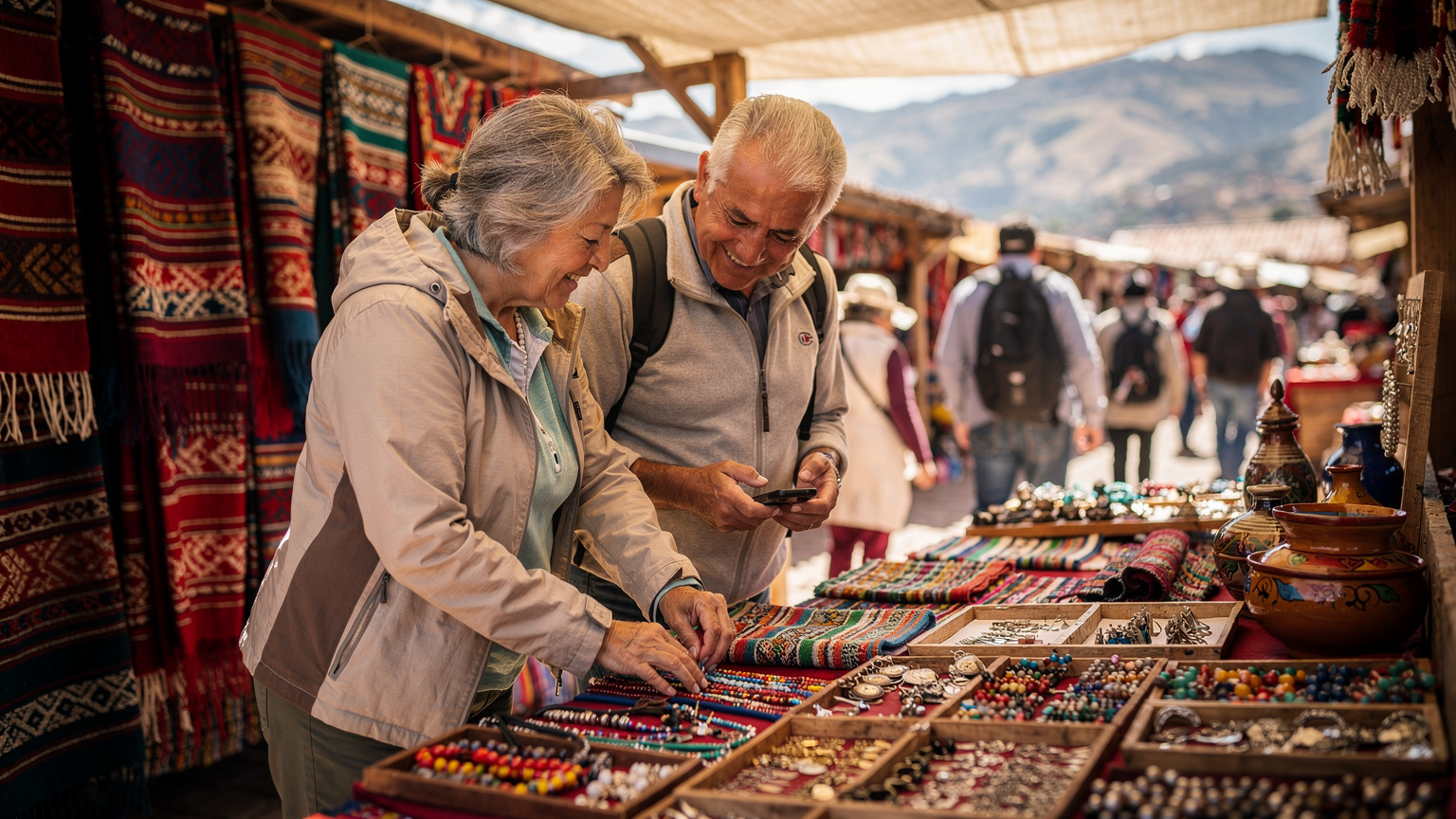
Scenario 2: The Two-Week Focused Trip
Now consider Maria, 68, visiting her family in Guayaquil, Ecuador, for two weeks. She'll mainly be in the city and maybe a day trip to Salinas. Her needs are mostly for WhatsApp calls with family, some light browsing, and using local transit apps like 'Moovit' for the Metrovia. (The Metrovia system is quite efficient, but knowing the routes in the 'Parque Centenario' district can be tricky without a map.)
Local SIM approach: Maria could easily buy a local Claro or Movistar SIM at the airport or in a mall near her family's neighborhood, like Kennedy Norte. A 15-day plan with 5-10 GB of data would cost around $10-15. This is a perfectly viable and cost-effective option for a short, single-country stay, especially if her phone doesn't support eSIMs or she prefers a physical card. She'd spend about 30 minutes on acquisition and activation.
eSIM approach: Maria could purchase a 15-day, 10 GB Ecuador eSIM plan for about $15-20. She installs it at home. Upon arrival, her phone connects immediately. While slightly more expensive than the cheapest local SIM, the convenience of immediate connectivity and avoiding a trip to a store might be worth the small premium for her. This is a clear case where the choice largely comes down to personal preference for convenience versus minimal cost savings.
Final Thoughts on Connectivity for Your South American Adventure
The landscape of travel connectivity has evolved dramatically, and for retirees embarking on a South American adventure in 2026, the eSIM stands out as the superior choice for most itineraries. While local physical SIMs still hold a place for very short, single-country trips, the benefits of eSIMs – cost-effectiveness for multi-country travel, unparalleled convenience, enhanced security, and seamless management – make them an almost indispensable tool for modern exploration.
My advice, after years of navigating everything from the chaotic streets of La Paz to the tranquil shores of Lake Titicaca, is to embrace the digital future. Spend your precious retirement hours exploring ancient ruins in the Sacred Valley or savoring a ceviche in Lima's Miraflores, not wrestling with tiny plastic cards or language barriers in a phone store. An eSIM lets you connect to the world while fully disconnecting into your adventure. For further reading, especially on optimizing your device for this new tech, you might find iPhone 15/16/17 eSIM Activation: Your 2026 Engineer's Guide to Global Connectivity helpful, even if you're not an engineer.
Frequently Asked Questions
What is the primary advantage of an eSIM for retirees traveling in South America?
The main advantage is seamless multi-country connectivity without needing to swap physical SIM cards. Retirees can purchase a regional plan covering several countries, ensuring continuous data as they cross borders, which saves time and avoids the hassle of repeated local SIM purchases and registrations.
Can I keep my home phone number active while using an eSIM for data in South America?
Yes, absolutely. Most modern smartphones support dual-SIM functionality, allowing you to use your home SIM for calls and texts (often on a pay-as-you-go roaming rate) while the eSIM handles all your data needs. This ensures you don't miss important calls or messages from home.
Are eSIMs more expensive than local SIMs in South America for long trips?
For multi-country, long-term trips (e.g., over a month across several nations), eSIMs often prove more cost-effective. While a single local SIM might be slightly cheaper for a short, single-country stay, regional eSIM plans eliminate the recurring cost of buying new SIMs in each country and prevent expensive roaming charges, offering better overall value.
What kind of coverage can I expect with an eSIM in South America?
eSIM providers typically partner with major local carriers in each country, like Claro, Movistar, or Tigo. This means you'll usually get access to the best available network coverage in urban areas and often in more remote regions, matching or even exceeding the coverage you'd get from a single local SIM.
Is it difficult to set up an eSIM on my phone?
No, setting up an eSIM is generally straightforward. After purchasing a plan online, you'll receive a QR code via email. You simply scan this QR code through your phone's settings (e.g., Settings > Cellular > Add eSIM on iPhone), and the eSIM profile installs automatically within minutes. It's often quicker and simpler than dealing with physical SIM cards.