
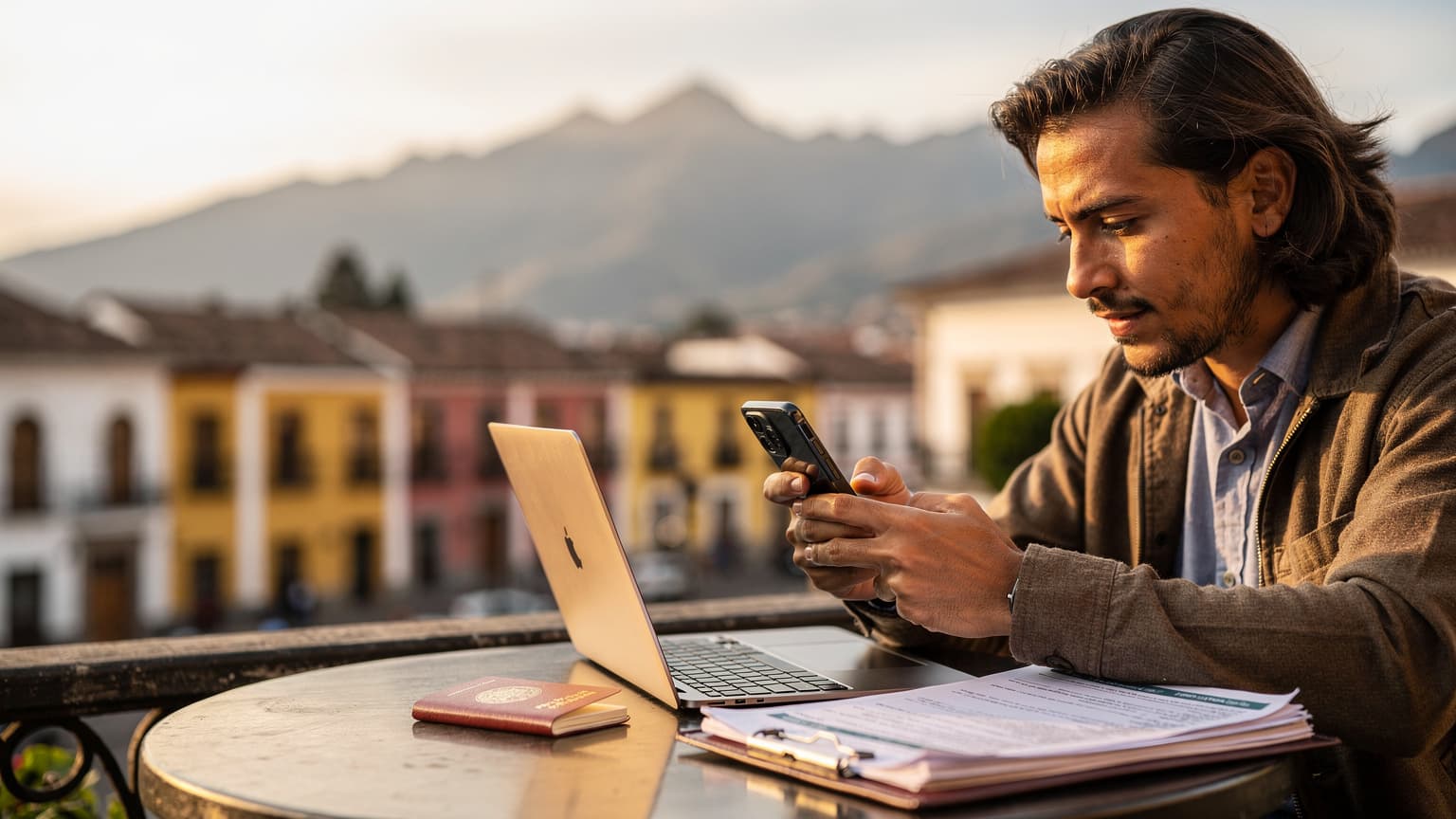
eSIM Neden Ecuador Yerleşim İçin Kritik?
When you're making a significant move, like establishing residency in Ecuador, connectivity shifts from a mere convenience to an absolute necessity. The traditional approach, purchasing a physical SIM card upon arrival, often comes with administrative hurdles, especially for those without a local ID or a permanent address. This is where an eSIM, or embedded Subscriber Identity Module, offers a distinct advantage, allowing you to secure a local number and data plan before even landing at Mariscal Sucre International Airport (UIO) in Quito. The Ecuadorian residency application process is rigorous, requiring consistent communication with government offices like the Ministry of Foreign Affairs and Human Mobility (Cancillería) and the civil registry (Registro Civil). An eSIM provides that foundational stability, ensuring you never miss a critical call or notification.
Beyond the initial setup, the longevity of an eSIM plan can be tailored to match your residency timeline. While short-term travel eSIMs might last a few weeks, many providers now offer longer-duration plans that align with the multi-month or even multi-year requirements of residency. This eliminates the need for frequent renewals or the inconvenience of swapping physical cards, a small but significant detail when you're coordinating bank accounts, utility setups, and immigration interviews. The seamless activation process means less time dealing with telecom stores and more time focusing on settling into your new life, whether that's exploring the historic center of Cuenca or navigating the bustling markets of Guayaquil.
Başlangıç Sürecinde İletişim Gereksinimleri
The very first step in any residency application is often providing contact information. This typically includes a reliable phone number. For an expat, this can be a catch-22: you need a local number to proceed, but getting one without local documentation can be tricky. An eSIM sidesteps this by allowing pre-purchase and activation, providing you with a functional Ecuadorian number and data plan from day one. This proactive approach ensures you can receive verification codes, schedule appointments, and respond to inquiries without delay. Imagine trying to coordinate a visa interview while relying solely on international roaming or unreliable public Wi-Fi, the potential for missed communications is immense.
Furthermore, some residency categories, particularly those for professionals or investors, may require proof of a stable communication channel. This isn't just about having a number, but demonstrating continuous access to it. An eSIM, with its digital provisioning, makes it easier to manage and maintain this stability compared to a physical SIM that could be lost or damaged. The underlying technology, essentially a programmable chip in your device, means your identity is tied to your phone's hardware, offering a layer of reliability that physical cards sometimes lack.
Resmi Kurumlarla Güvenli Bağlantı
Official communication with Ecuadorian government bodies often involves sensitive personal data. While email is common, phone calls and SMS remain crucial for time-sensitive alerts or verification. An eSIM, by providing a direct connection to a local network, reduces the reliance on potentially insecure public Wi-Fi networks. This becomes particularly relevant when dealing with online portals for visa applications or tax filings. The integrity of your connection directly impacts the security of your data. Moreover, some governmental services might send two-factor authentication (2FA) codes via SMS, making a stable local number indispensable. Consider the friction of trying to log into a critical immigration portal only to find your foreign SIM can't receive SMS in Ecuador, it's a frustrating, but preventable, scenario.
Ecuador Mobil Ağ Altyapısı ve eSIM Uyumluluğu
Ecuador's mobile network landscape is dominated by three main operators: Claro, Movistar, and CNT. All three have invested significantly in their 4G LTE infrastructure, with expanding 5G coverage in major urban centers. Understanding which network your eSIM will utilize is crucial for predicting performance. Most international eSIM providers offering service in Ecuador will partner with one or more of these local carriers. For instance, a common partnership might see an eSIM leveraging Claro's extensive network, particularly its FDD-LTE on Band 2 (1900 MHz) and Band 4 (AWS, 1700/2100 MHz), which are workhorse bands for 4G connectivity across Latin America. The newer 5G deployments often utilize n78 (3500 MHz) in urban areas, offering substantially higher theoretical speeds.
| Operator | Primary 4G LTE Bands | Typical Urban Download Speed (Mbps) | Typical Urban Upload Speed (Mbps) |
|---|---|---|---|
| Claro | B2, B4, B7 | 30-80 | 10-30 |
| Movistar | B2, B4, B7 | 25-70 | 8-25 |
| CNT | B2, B4 | 20-60 | 5-20 |
Yerel Operatörler ve eSIM Desteği
While all major Ecuadorian carriers technically support eSIM for their contract customers, securing an eSIM as a tourist or new arrival directly from them can be cumbersome due to ID requirements. This is precisely why third-party Ecuador eSIM providers are so valuable for expats. They aggregate access to these networks, allowing you to purchase a plan online without needing local documentation upfront. You're essentially buying a prepaid data and voice plan that rides on the established infrastructure of Claro or Movistar, but with the convenience of digital provisioning. This bypasses the typical activation queues and paperwork at a physical store, a welcome relief after a long international flight.
It's important to verify which local carrier an international eSIM plan utilizes, especially if you plan to spend significant time in specific regions. While Claro generally boasts the widest coverage, Movistar often has strong performance in particular urban areas. CNT, being a state-owned enterprise, provides a solid, albeit sometimes less extensive, network. Checking coverage maps before you commit is always a sensible engineering practice.
eSIM Destekleyen Cihazlar ve Uyumluluk
The vast majority of modern smartphones, including recent models from Apple (iPhone XS and newer), Samsung (Galaxy S20 and newer), Google (Pixel 3 and newer), and many others, support eSIM technology. Before purchasing an eSIM for Ecuador, confirm your device's compatibility. While most flagship phones offer robust eSIM functionality, some regional variants, particularly those sold in China or Hong Kong, might lack eSIM support. Also, ensure your phone is unlocked, meaning it's not tied to a specific carrier from your home country. An unlocked phone is a prerequisite for using any international SIM or eSIM service. Without this, even a perfectly provisioned eSIM will fail to register on the local network, leading to frustrating 'No Service' messages.
eSIM ile Numara İstikrarı ve Resmi İletişim
One of the less obvious but profoundly important benefits of using an eSIM for your Ecuadorian residency journey is number stability. Residency applications are not overnight affairs; they involve multiple stages, interviews, document submissions, and often, a waiting period. Throughout this process, government agencies, lawyers, and other official contacts will need a consistent way to reach you. Changing your phone number mid-application can cause significant delays and administrative headaches. An eSIM, especially with a plan that offers a local number for an extended duration, provides this vital continuity. You can carry your Ecuadorian number with you, even if you travel outside the country temporarily, a flexibility physical SIMs don't always offer.
Adres Değişikliği ve İletişim Güncellemesi
Relocating to a new country often means moving residences multiple times before settling into a permanent home. Each address change requires updating various official records. While your physical address might change, your phone number, powered by an eSIM, can remain constant. This is a critical distinction, as government agencies often rely on the phone number as a primary point of contact. Imagine having to update your number with the Ministerio de Relaciones Exteriores y Movilidad Humana every time you move from a temporary Airbnb in La Mariscal to a long-term rental in Cumbayá. The administrative burden quickly becomes overwhelming. An eSIM simplifies this, providing a fixed communication anchor in a sea of logistical changes.
Acil Durumlar ve Güvenlik
In any foreign country, having a reliable line of communication for emergencies is paramount. Whether it's contacting local police (911), an embassy, or a medical professional, a stable phone number is essential. An eSIM ensures you're always connected, even if your primary physical SIM slot is occupied by your home country's card. This dual-SIM functionality, often enabled by an eSIM and a physical SIM, provides redundancy, meaning you have two active numbers simultaneously. This not only offers peace of mind but is also a practical safety measure, allowing you to maintain ties to your home network while fully integrated into the local Ecuadorian system. Voice over LTE (VoLTE) and Voice over Wi-Fi (VoWiFi) are standard features on modern networks, and ensuring your eSIM profile supports these (most do by default with major carriers) means you can make crystal-clear calls even in areas with weak cellular signal but strong Wi-Fi, a common scenario in some of Ecuador's more remote Andean towns or Amazonian lodges. Just remember, some older Android phones might require a manual APN setting tweak to enable VoLTE if it doesn't activate automatically, a common edge case for devices not originally sold in the Ecuadorian market.
Güvenilir Bağlantı Kanıtı ve Pratik Kullanım
While not always explicitly stated in the residency requirements, demonstrating reliable connectivity can be an implicit expectation, especially for those applying for professional or investor visas. It signals stability and an ability to integrate into the local society and economy. An eSIM, by providing a consistent network presence, subtly contributes to this perception. Beyond the bureaucratic, the practical advantages are immediate and tangible, from using navigation apps like Waze or Google Maps to finding your way around Quito's intricate street grid, to staying in touch with new friends and colleagues via WhatsApp, the most popular messaging app in Ecuador.
Yerel Uygulamalar ve Hizmetlere Erişim
Many essential local services and applications in Ecuador require a local phone number for registration or verification. This includes everything from ride-sharing apps like Uber and InDriver to banking apps, food delivery services, and even some public transit payment systems. Attempting to use a foreign number for these can lead to frustrating compatibility issues. An eSIM with an Ecuadorian number seamlessly integrates you into this digital ecosystem, making daily life significantly smoother. You can download and register for these apps without a hitch, a small but impactful detail that contributes to a feeling of being settled. For example, setting up a local bank account will almost certainly require an Ecuadorian number for SMS alerts and transaction verifications.
Uzaktan Çalışma ve Dijital Göçebeler İçin Avantajlar
Ecuador is an increasingly popular destination for digital nomads. For these individuals, reliable internet connectivity isn't just a convenience, it's their livelihood. An eSIM allows digital nomads to maintain a dedicated, high-speed data connection wherever they go, from co-working spaces in Cuenca to quiet cafes in Baños de Agua Santa. The ability to quickly switch between data plans or even carriers via eSIM if one network performs poorly in a specific location is invaluable. This flexibility is a cornerstone of remote work, ensuring you can participate in video conferences, upload large files, and access cloud services without interruption. Imagine being on a critical client call and suddenly losing connection because your physical SIM lost signal, a nightmare scenario that eSIM redundancy can mitigate.
Ecuador eSIM Aktivasyonu Adım Adım
Activating an eSIM for Ecuador is generally a straightforward process, especially compared to dealing with physical SIM cards and local registration. The beauty of eSIM lies in its digital nature, allowing you to get connected quickly and often before you even arrive in the country. This means you can land at Quito or Guayaquil with immediate access to data, allowing you to order an Uber, navigate to your accommodation, or contact your host without scrambling for Wi-Fi. It’s a significant upgrade from the old way of searching for a telecom store after a long flight, often burdened with luggage and jet lag.
Satın Alma ve Kurulum Süreci
- Choose an eSIM Plan: Research and select an eSIM plan that best suits your data needs and duration for Ecuador. Providers typically offer various packages, from short-term tourist plans to longer-term options suitable for residents. Pay attention to the data allowance, validity period, and whether it includes a local phone number.
- Purchase Online: Complete the purchase on the provider's website. You'll usually receive an email containing a QR code or manual activation details shortly after. Keep this email accessible, ideally on a separate device or printed out, as you'll need to scan the QR code with your eSIM-compatible phone.
- Scan QR Code (or Manual Entry): On your smartphone, navigate to your cellular settings. For iOS, go to Settings > Cellular > Add eSIM. For Android, it's typically Settings > Network & internet > SIMs > Add eSIM. Choose to 'Use QR Code' and scan the code provided by the eSIM vendor. If scanning isn't possible, select 'Enter Details Manually' and input the SM-DP+ Address and Activation Code.
- Configure eSIM Settings: Once the eSIM profile is downloaded, your phone will prompt you to configure it. Name your eSIM (e.g., "Ecuador Data" or "Ecuador Local"), set it as your primary line for data (if desired), and choose whether to enable data roaming (which should be enabled for most international eSIMs to function). You can typically keep your home SIM active for calls and texts while using the eSIM for data.
- Verify Connectivity: After installation, your phone should connect to a local Ecuadorian network. Check for network signal bars and try browsing a website or sending a message. If you encounter issues, a simple restart of your phone can often resolve them. Ensure your APN settings are correct, though most eSIMs auto-configure this; occasionally, a manual check (e.g., for Claro, it might be 'internet.claro.com.ec') can resolve connectivity quirks, especially on older Android devices.
eSIM Yönetimi ve Birden Fazla Profil
Modern smartphones can store multiple eSIM profiles, allowing you to switch between them as needed. This is incredibly useful for expats who might travel frequently or want to maintain a home country number alongside their Ecuadorian one. You can have your Ecuadorian eSIM active for daily use and seamlessly switch to a different eSIM when visiting a neighboring country like Colombia or Peru, or even back to your home country's eSIM when you return for a visit. The ability to manage these profiles directly from your phone's settings, activating or deactivating them with a few taps, provides unparalleled flexibility. It's like having a digital wallet of SIM cards, ready to be deployed instantly, removing the physical hassle of swapping tiny plastic cards. For a comprehensive look at how this technology works, consider reading "How Does an eSIM Work? A Family Traveler's Simple Guide to Connectivity in 2026".
Veri Hızları ve Kapsam Beklentileri, Operatör Bazında
Understanding realistic data speed and coverage expectations is vital, especially when your connectivity underpins your residency application and daily life. Ecuador's mobile networks have made significant strides, but performance can still vary widely between urban centers and rural areas. For instance, in Quito's commercial district of La Carolina, you might regularly see 4G LTE speeds on Claro or Movistar hitting 60-80 Mbps down and 20-30 Mbps up, particularly on Band 4 (AWS). However, venture into a more remote area like Vilcabamba in the south, and speeds might drop to 5-10 Mbps down on Band 2, or even fall back to 3G (UMTS) if 4G infrastructure is sparse. These nuances are crucial for planning your work and communication strategies.
| Region | Operator | Expected Download (Mbps) | Expected Upload (Mbps) | Primary Bands Utilized |
|---|---|---|---|---|
| Quito (Urban Core) | Claro/Movistar | 40-90 | 15-40 | B2, B4, B7 (LTE); n78 (5G) |
| Guayaquil (Urban Core) | Claro/Movistar | 35-85 | 12-35 | B2, B4, B7 (LTE); n78 (5G) |
| Cuenca (Urban/Suburban) | Claro/Movistar | 20-60 | 8-25 | B2, B4 (LTE) |
| Coastal Regions (e.g., Manta) | Claro/Movistar/CNT | 15-50 | 5-20 | B2, B4 (LTE) |
| Andean Rural Areas | Claro (strongest) | 5-20 | 2-8 | B2 (LTE/3G) |
Şehir Merkezleri ve Kırsal Bölgeler Arasındaki Farklar
As with many countries, a significant disparity exists between urban and rural connectivity. Major cities like Quito, Guayaquil, and Cuenca enjoy robust 4G LTE coverage, with 5G rollout accelerating in key commercial and residential zones. This means seamless streaming, video calls, and large file transfers are generally achievable. However, once you venture into the more remote Andean highlands, Amazon basin, or even some parts of the coast, coverage can become spotty. In these areas, you might find yourself relying on Band 2 (1900 MHz) for 4G, which has good penetration but can be slower, or even falling back to 3G/UMTS. If your residency plans involve settling in a less populated area, it's prudent to check detailed coverage maps provided by the local carriers (Claro, Movistar, CNT) to ensure your chosen eSIM partner offers adequate service in that specific region. This proactive research can save considerable frustration down the line.
5G Erişim ve Uygulama Alanları
Ecuador's 5G deployment is still in its nascent stages, primarily concentrated in high-demand urban areas. Both Claro and Movistar have begun deploying 5G, with Claro often leveraging the 3.5 GHz band (n78) for its initial rollout. While 5G offers theoretical speeds well into the hundreds of Mbps, real-world performance will depend on network density and your proximity to a 5G tower. For most residency-related tasks, 4G LTE is more than sufficient, but 5G can provide an extra layer of performance for data-intensive activities, like large software updates or high-definition video conferencing. If your phone supports 5G and you're in a 5G-enabled part of Quito, you can expect noticeably faster downloads, which is a definite plus when dealing with extensive online paperwork or enjoying streaming entertainment after a day of bureaucratic appointments.
Potansiyel Teknik Engeller ve Çözümleri
While eSIM technology generally offers a smoother experience, it's not entirely without its potential quirks. As a telecom engineer, I've seen enough oddities to know that no system is foolproof. Understanding these potential roadblocks, and more importantly, their solutions, can save you significant frustration when setting up your digital lifeline in Ecuador. These aren't usually deal-breakers, but rather small technical details that, if overlooked, can temporarily disrupt your service. One common issue, for example, might be related to Carrier Aggregation (CA), where your phone combines multiple frequency bands to achieve higher speeds. If an eSIM profile isn't optimized for local CA configurations, you might experience lower-than-expected speeds even in good coverage areas.
APN Ayarları ve Dolaşım Sorunları
The Access Point Name (APN) is essentially the gateway between the mobile network and the public internet. Most eSIM profiles will automatically configure the correct APN settings, but occasionally, particularly with older Android devices or specific international phone models, manual intervention might be necessary. If your eSIM activates but you can't access data, checking the APN settings is always the first diagnostic step. You'll typically find this under Cellular Network settings. For Claro Ecuador, a common APN is 'internet.claro.com.ec', while Movistar might use 'internet.movistar.com.ec'. Incorrect APN settings can cause a data connection to fail entirely, despite showing full signal. Furthermore, ensure data roaming is enabled for your eSIM profile. While it sounds counter-intuitive for a local plan, international eSIMs often operate as a roaming service on the local network, and disabling roaming would prevent data access. This is a common point of confusion for new eSIM users.
VoLTE ve VoWiFi Uyumluluk Endişeleri
Voice over LTE (VoLTE) and Voice over Wi-Fi (VoWiFi) are critical for high-quality voice calls and maintaining connectivity in areas with weak cellular signal but strong Wi-Fi. While most modern phones and network operators in Ecuador support these technologies, occasional compatibility issues can arise with international eSIMs. Specifically, if your device wasn't originally sold in Ecuador, or if the eSIM provider hasn't fully enabled these features for its profile, you might find voice calls dropping to 3G (UMTS) or even failing in certain scenarios. This is particularly noticeable in areas with limited 2G/3G coverage, where VoLTE is the primary method for voice calls. If you experience poor call quality or dropped calls, check your phone's settings for VoLTE/VoWiFi enablement, and if issues persist, contact your eSIM provider's support. It's a subtle but important detail for reliable communication, especially when dealing with critical government calls. The same applies to Wi-Fi Calling; ensure it's toggled on in your phone's settings and that your eSIM plan supports it, as this can be a lifesaver in basements or remote areas where Wi-Fi is available but cellular signal is not.
Uzun Süreli Yerlesim İçin eSIM Planları Seçimi
Choosing an eSIM plan for long-term residency in Ecuador requires a different calculus than selecting a short-term travel data package. You're not just looking for a week's worth of data; you need a stable, cost-effective, and reliable solution that can support your communication needs for months, or even years. This means evaluating factors like data rollover, automatic renewal options, and the ability to top up your balance easily. Many providers offer regional plans that cover multiple countries in Latin America, which can be advantageous if you anticipate cross-border travel during your residency. For instance, some plans might include data not just for Ecuador but also for Colombia and Peru, a common travel route for expats. You might also want to compare options like "Maya eSIM vs. Ecuador Abroad: Unpacking Your International Data Options for 2026" to see how different providers stack up for long-term global connectivity.
Veri Gereksinimleri ve Bütçe Planlaması
Your data consumption patterns will likely change significantly once you're a resident. You might rely less on Wi-Fi and more on cellular data for daily tasks, streaming, and remote work. Therefore, assess your typical monthly data usage. Are you a heavy streamer? Do you frequently participate in video calls? Are you backing up large files to the cloud? Choose a plan with sufficient data, or one that offers flexible top-ups at reasonable rates. Overpaying for data you don't use is inefficient, but running out of data at a critical moment is far worse. Many eSIM providers offer tiered plans, from 10 GB to unlimited data, allowing you to scale up or down as your needs evolve. Budgeting for your monthly communication expenses is a key part of financial planning for your new life in Ecuador, so a predictable eSIM cost can be a significant advantage.
Müşteri Desteği ve Yeniden Yükleme Seçenekleri
For long-term use, reliable customer support is paramount. If you encounter a technical issue or need to adjust your plan, responsive and knowledgeable support can make all the difference. Look for providers that offer 24/7 support via chat, email, or phone. Equally important are convenient top-up and renewal options. Can you easily add more data or extend your plan online? Are there automatic renewal features? Some providers even offer in-app top-ups, which simplifies the process considerably. The ability to manage your plan directly from your phone, without needing to visit a physical store or interact with a potentially Spanish-only customer service representative, adds immense value for an expat. This administrative ease frees up your time to focus on other aspects of settling in, rather than wrestling with telecom logistics.
eSIM ve Yerel Bankacılık İletişim Entegrasyonu
Establishing a local bank account is one of the most fundamental steps in becoming a resident in Ecuador. Without it, managing finances, paying bills, and even receiving income becomes a logistical nightmare. Almost universally, Ecuadorian banks, like Banco Pichincha, Banco Guayaquil, or Produbanco, require a local phone number for various security and communication purposes. This includes everything from initial account setup and verification to ongoing two-factor authentication for online banking transactions and SMS alerts for account activity. An eSIM providing a stable Ecuadorian number is therefore not just a convenience, but a critical enabler for your financial integration. It’s an infrastructure piece that allows you to fully participate in the local economy.
Banka Hesabı Açma ve Güvenlik Protokolleri
When opening a bank account in Ecuador, you'll be asked for a local contact number. This number is then linked to your account for all official communications. More importantly, it becomes a crucial component of the bank's security protocols. Most online banking platforms and mobile apps in Ecuador utilize SMS-based two-factor authentication (2FA) for logging in, approving transactions, or changing personal details. If your phone number changes or becomes inactive, you could be locked out of your bank account, which can be a severe impediment to daily life. An eSIM with a persistent local number guarantees you'll continue to receive these critical security codes, ensuring uninterrupted access to your funds and financial services. It’s a foundational layer of digital security for your new life.
Fatura Ödeme ve Online İşlemler İçin Önem
Paying utility bills (electricity, water, internet), rent, and other services in Ecuador often involves online portals or mobile apps that require a local phone number for verification or notifications. Imagine trying to pay your electricity bill through the CNEL EP app only to realize your foreign number isn't recognized, or you can't receive the one-time password. This is where the stability of an eSIM-provided local number becomes invaluable. It integrates you into the local digital payment ecosystem, allowing you to manage your finances and household efficiently. From arranging a Covicab taxi to ordering groceries via Rappi, many essential services hinge on having a reliable local contact number. Without it, simple tasks can become unnecessarily complex, adding friction to your everyday life as a resident.
Ekvador Vatandaşlığı ve Dijital Kimlik Geleceği
As Ecuador, like many nations, continues to digitize its governmental services and citizen interactions, the role of a stable digital identity will only grow. While an eSIM is primarily about connectivity now, its underlying technology hints at a future where your digital presence is seamlessly tied to your residency status. For those considering eventual Ecuadorian citizenship, maintaining a consistent digital footprint, including a stable local phone number, lays a solid foundation. The convergence of physical and digital identities is accelerating, and being prepared with robust, flexible connectivity solutions like eSIMs is a forward-thinking approach.
Gelecekteki Trendler ve Dijital Entegrasyon
The global trend is towards greater digital integration in civic life. We're seeing more countries implement digital IDs, online voting, and entirely digital processes for government services. Ecuador is no exception. As an expat establishing residency, embracing technologies like eSIM positions you well for this evolving landscape. It allows for easier adoption of new digital government platforms that will undoubtedly require robust authentication linked to local identifiers. The ability to manage your communication profile digitally means you're not reliant on physical infrastructure, which aligns perfectly with the future of digital identity. Consider how crucial digital connectivity is in other aspects of international travel, like with "Japan Travel 2026: Does a Ecuador Abroad JP eSIM Actually Save You Yen?", and you see a consistent pattern of digital solutions streamlining complex processes.
eSIM ile Uzun Vadeli Planlama ve Adaptasyon
Adopting an eSIM for your Ecuadorian residency is more than just a temporary fix; it's a strategic long-term decision. It offers adaptability, allowing you to switch plans, upgrade data, or even change local network partners with relative ease, all without the physical constraints of traditional SIM cards. This flexibility is invaluable for a long-term resident whose needs might evolve over time. It provides a degree of future-proofing in a rapidly changing technological landscape, ensuring your communication infrastructure can keep pace with both your personal needs and the country's digital progression. By leveraging eSIM technology, you're not just solving a current problem; you're building a resilient and adaptable digital foundation for your new life in Ecuador.
Frequently Asked Questions
Can I get an Ecuadorian phone number with an international eSIM?
Yes, many international eSIM providers offer plans that include a local Ecuadorian phone number. This number functions just like a physical SIM card number and is crucial for official residency communications, banking, and local app registrations.
Do I need a local ID to activate an eSIM in Ecuador?
Generally, no, if you purchase through a third-party international eSIM provider. These providers allow you to activate an eSIM and get a local number without needing an Ecuadorian ID upfront, bypassing the typical requirements of local carriers for new customers.
What are the primary mobile network operators in Ecuador that eSIMs might use?
The main operators are Claro, Movistar, and CNT. International eSIMs typically partner with one or more of these carriers to provide service, leveraging their existing 4G LTE and emerging 5G infrastructure.
Will an eSIM affect my home country's phone number?
No, an eSIM works independently. You can keep your home country's physical SIM card active in your phone for calls and texts, while using the Ecuadorian eSIM for data and local calls/SMS. Your phone effectively operates as a dual-SIM device.
Are data speeds reliable with an eSIM in Ecuador?
Data speeds are generally reliable in urban centers like Quito and Guayaquil, with 4G LTE speeds often ranging from 30-80 Mbps download. Speeds can decrease in rural areas, but the connection remains stable enough for most residency-related tasks.
What if my phone doesn't automatically configure the APN settings for the eSIM?
If your eSIM activates but data doesn't work, you might need to manually configure the APN settings. You can find the correct APN for the underlying Ecuadorian carrier (e.g., 'internet.claro.com.ec' for Claro) in your phone's cellular settings.